Partner Spotlight
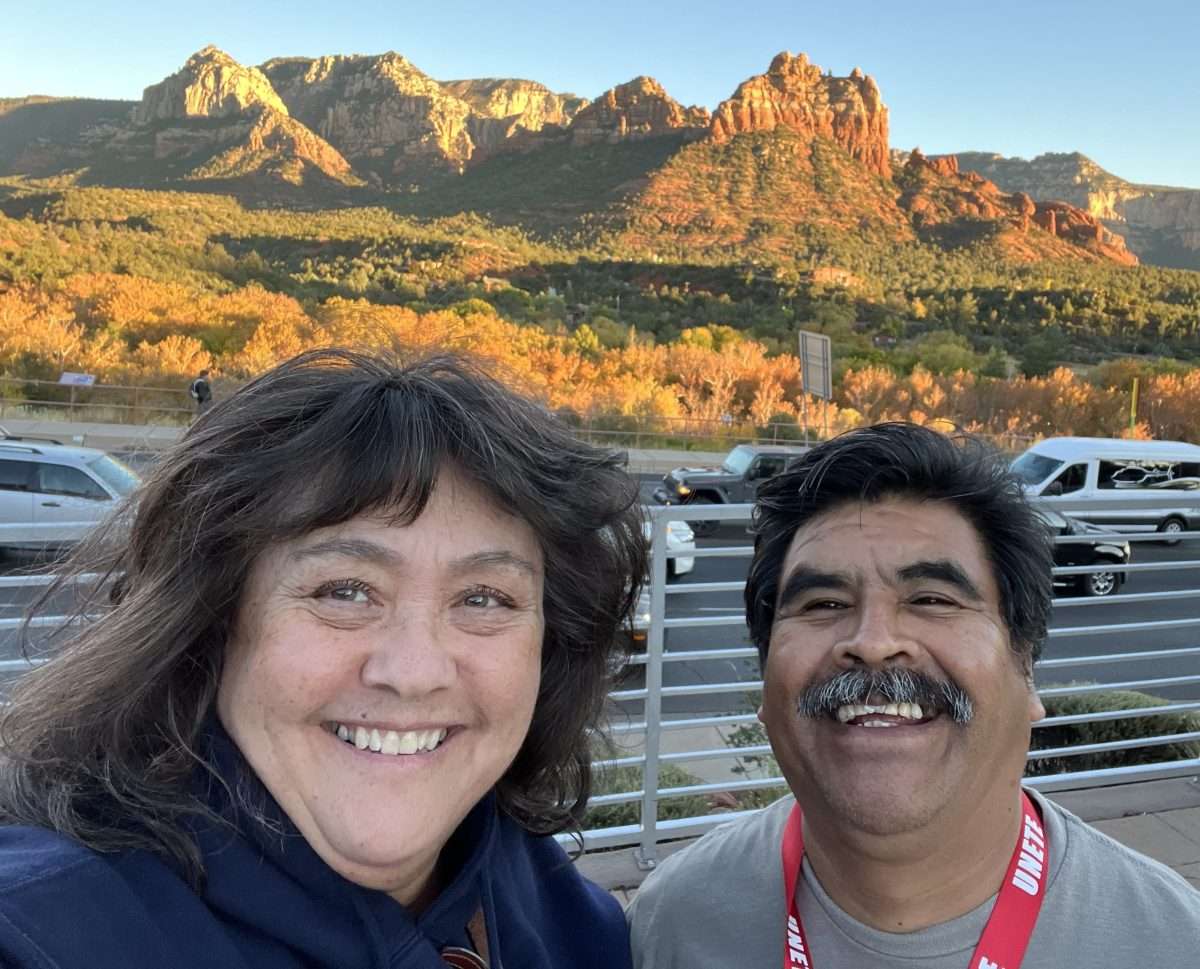
KATHY KEESEE & DAGOBERTO MORALES, UNETE
When Kathy Keese and Dagoberto Morales met 35 years ago, neither of them could have known that their shared passion for helping others would turn into a lifelong partnership at UNETE. From humble beginnings to a thriving community organization, the story of UNETE, Centro para Campesinos e Inmigrantes Advocacy is not just about the work they do—it’s also about relationships and the shared mission that has been at its heart from the start.
Founded in 1996 by Kathy and Dagoberto, UNETE began as a small, volunteer-run organization dedicated to advocate for agricultural workers’ rights and wages. They saw the struggles people were facing on the fields and the working conditions. “Our community needed a voice—someone who could help them stand up for their rights and hold employers accountable,” expressed Kathy, Program Coordinator. Over time, UNETE built strong relationships with government agencies, ensuring that employers honored their commitments to workers.
Kathy’s passion for advocacy is deeply personal. Her grandfather was born in Japan and emigrated to Hawaii, where he helped farm workers by reading and writing letters to their families back in Japan. “That’s where I got my inspiration. Helping people feels like it’s in my blood,” she said.
Dagoberto’s passion comes from his own life journey. He immigrated from Mexico at the age of 20, working in the fields under harsh conditions and facing deportation multiple times. “I lived the struggles of farm workers– the poor working conditions, the lack of housing and basic needs, the constant worry about deportation,” Dagoberto remembers. Although he never imagined himself as a leader, Dagoberto felt a deep sense of responsibility to act when the community needed help.
Though their backgrounds were different, Kathy and Dagoberto both felt a profound responsibility to give back to the community. “When I first met Dagoberto, I could see how much he understood the people we were trying to help,” Kathy says.
In 2020, when the COVID-19 pandemic hit, UNETE found itself facing new challenges. The demand for assistance surged and they adapted quickly. Kathy and Dagoberto left their full-time jobs to dedicate themselves fully to helping the community. “People were losing their jobs, they didn’t have food, they didn’t know where to turn. We had to be there for them,” Kathy says. They immediately started a fundraiser to provide beans, rice, and other essentials to struggling families and partnered with OWR to provide much-needed financial assistance to families. “We had a lady call us, asking for some beans. She said she didn’t have any food for her children. That moment hit me hard. We just did whatever we could to help,” Dagoberto remembers.
Kathy and Dagoberto’s shared vision has transformed UNETE into a cornerstone for farm workers and made a lasting impact in the Latino immigrant community. Their programs have expanded to include a food pantry, rental assistance, healthcare navigation, community education and advocacy, English and computer classes, and much more.
One of the most pressing issues that farm workers continue facing in Jackson County is the climate crisis. Each year, the smoke from wildfires, extreme summer heat, and extreme cold in the winter put agricultural workers in harm’s way. These workers are often forced to choose between their health and their paycheck.
To address these challenges, UNETE partnered with OWR to launch the Climate Change Fund (CCF) that provides financial assistance to farm worker families who struggle making ends meet. “Low wages for farm workers force them to risk their lives so they don’t miss a paycheck and CCF has made a huge difference, helping these families pay their bills and get through those tough months,” Kathy shares.
“Over the years, our partnership with OWR has had a tremendous impact, especially in times when our immigrant community needs it the most,” Kathy explains. Through OWR programs like the CCF, UNETE has expanded its impact, addressing the unique challenges of the immigrant, Indigenous, and Latino farm workers—who risk everything to feed our communities. By prioritizing their needs, we’re honoring their contributions and ensuring they don’t just survive, but thrive.